
Does Medicaid Cover Allergy Testing in New York?
Understand New York Medicaid allergy-care checks, referrals, test preparation, and exact-plan verification before choosing an allergist.
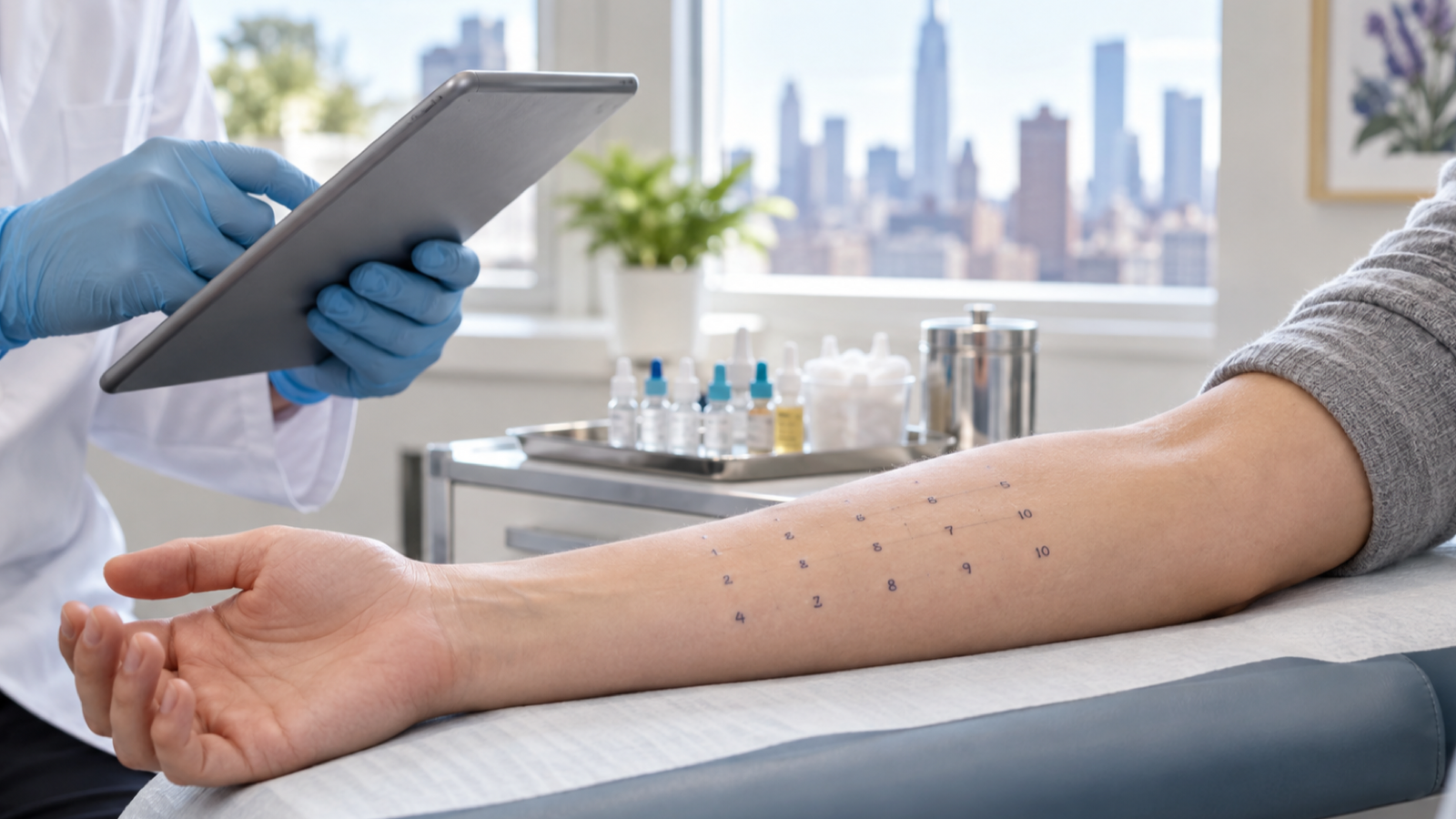
New York Medicaid can cover medically necessary allergy and immunology care, including specialist visits and services used to evaluate or treat allergies. That is not the same as a promise that every test, injection, medicine, or office is covered for every member. The answer depends on whether you use fee-for-service Medicaid or a managed-care product, which clinician and location you choose, what service the allergist recommends, and whether a referral or prior approval is required.
Before booking, identify the exact product on your current card and ask two specific questions: does this clinician participate at this office, and what must be completed before the consultation or test? This guide explains how to get those answers without assuming that a directory listing settles coverage.
The short version
- Allergy and immunology care may be covered when it is medically necessary and the applicable network and administrative requirements are met.
- Managed-care members commonly start with their primary care provider for a specialist referral. Fee-for-service rules and office requirements can differ.
- A consultation, skin test, blood test, breathing test, prescription, and immunotherapy are separate services. Confirm each one that may apply.
- A Medicaid listing does not guarantee participation in every managed-care product or at every office.
- Some medicines affect skin testing. Ask the allergist's office before changing anything and never stop a prescription on your own.
What Medicaid coverage means for an allergy visit
The current eMedNY physician manuals and fee schedules include physician services used in allergy evaluation and treatment. The schedule is a provider billing reference. It does not decide whether a particular test is medically necessary for you, whether a managed-care plan requires authorization, or whether the chosen clinician participates in your product.
An allergist begins with the history and examination. Depending on the clinical question, the clinician may recommend skin testing, blood testing, breathing tests, another evaluation, or no test. Testing is most useful when it addresses a specific question raised by symptoms. A broad panel without a matching history can produce results that are difficult to interpret.
If the clinician recommends allergy shots or another form of immunotherapy, ask the plan and practice about that service separately. Repeated visits, preparation of extracts, office supervision, and prescriptions can follow different administrative paths. Confirm the location as well as the clinician, especially if the allergist works at more than one office.
Do you need a referral to see an allergist?
For managed care, the New York State Medicaid managed-care model handbook describes a general process in which a primary care provider refers a member for specialty care the PCP cannot provide. It also describes standing referrals for ongoing specialty care. Your product's current handbook and member services can explain the process that applies to you.
Fee-for-service Medicaid does not use the same managed-care network process, but the practice may still need an order, referral note, or records that explain the reason for the visit. Online scheduling does not create a referral or prior authorization. Ask who must send the document and whether the allergy office has received it.
When calling, use the exact clinician name, office address, product name, and planned visit reason. A general answer about the insurer's brand can be misleading because one brand may include several products.
What will the visit cost?
New York's Medicaid benefits FAQ explains member cost-sharing and notes that managed-care members generally do not have a Medicaid copayment. It also says there is no Medicaid copayment for private practicing physician services under the fee-for-service rules described there. Coverage and any other financial responsibility can still depend on the product, provider, setting, and service.
Ask the plan whether the consultation, testing, and treatment are in network at the selected office. Ask the practice whether it expects separate appointments or benefit checks. If the answers conflict, return to both sources with the same clinician, address, product, and service details rather than relying on a broad statement that the office "takes Medicaid."
How to prepare for possible allergy testing
The American College of Allergy, Asthma and Immunology's patient guide explains that antihistamines and some other medicines can interfere with skin-test responses. The timing varies by medicine. Contact the selected office for its instructions before the appointment.
Do not stop asthma medicines, psychiatric medicines, blood-pressure medicines, or any other prescription on your own. If a medicine cannot safely be paused or a skin condition makes skin testing difficult, the allergist may consider another approach. Blood and skin tests do not answer every question in the same way, so the clinician should choose the method.
Bring:
- Your Medicaid card and managed-care product card, if you have both.
- Photo identification and any referral or order the plan requires.
- A complete list of prescriptions, over-the-counter medicines, vitamins, and supplements.
- Previous allergy, asthma, emergency, and testing records that relate to the concern.
- Photos of hives, rashes, or swelling that disappeared before the visit.
- A short timeline of what happens, when it starts, where you are, and how long it lasts.
What happens at the first appointment?
The first appointment may be a consultation only. The allergist can review the symptom pattern, family and medical history, medicines, previous reactions, and earlier tests. The clinician may examine the nose, skin, lungs, or other relevant areas and then decide whether testing is useful.
Ask the office whether testing may happen the same day, how long to allow, and whether a second appointment is likely. Do not assume that a scheduled consultation includes a particular test. The choice should depend on the history, safety, and the question the test is meant to answer.
For a severe reaction with trouble breathing, fainting, confusion, or rapidly worsening swelling, call 911. Do not wait for a routine appointment or use an online directory as emergency guidance.
Allergy shots and other ongoing treatment
Allergy shots involve repeated supervised visits. If they are recommended, ask how the build-up and maintenance schedule works, where injections are given, what happens after an injection, and how missed visits are handled. Then verify the exact service and office with the plan. A standing specialist referral may help in some managed-care situations, but the plan must explain whether it applies.
Prescription benefits for New York Medicaid members are administered through NYRx. A prescribed medicine can still have product, prior-authorization, or dispensing rules. Ask the prescriber and pharmacist about the exact prescription rather than assuming that every brand or device follows the same process.
New York City allergy triggers and useful notes
Symptoms can change with tree, grass, and ragweed seasons, air quality, and time spent indoors. The NYC Health asthma resource lists common triggers such as smoke, pollen, dust, mold, cockroaches, mice, and pets. A trigger list is not a diagnosis. Write down what you observe and let the clinician decide which possibilities need evaluation.
For apartment or workplace concerns, note the room, time, weather, cleaning products, visible moisture, pests, and whether symptoms improve elsewhere. This kind of timeline can help the visit stay focused and may prevent unnecessary testing.
Find an allergist listed with Medicaid in New York
BestDoc currently has qualifying allergy and immunology listings in Brooklyn and Manhattan. A clinician who practices in both boroughs is still one provider, and plan participation can vary by office. Start with all allergists listed with Medicaid or compare Brooklyn Medicaid listings and Manhattan Medicaid listings.
If Medicaid is not the plan you want to filter by, browse all participating allergists and immunologists, Brooklyn offices, or Manhattan offices. Confirm the exact product and selected location with the plan and practice before relying on coverage.
For another specialist-preparation example, see our guide to a first neurologist appointment in NYC. Our New York Medicaid guides also explain how benefit questions differ for podiatry and dentistry.
Frequently asked questions
Does Medicaid cover allergy testing in New York?
New York Medicaid can cover medically necessary services used in allergy evaluation, but coverage is not automatic for every test. Confirm the clinician, office, product, planned service, referral, and authorization requirements with the plan and practice.
Does Medicaid cover allergy shots in New York?
Immunotherapy services may be covered when they are medically necessary and applicable network and administrative requirements are met. Verify the exact service, office, repeat-visit process, and any authorization with the plan and practice.
Do I need a referral to see an allergist with Medicaid?
Managed-care members commonly use a PCP referral for specialist care, while fee-for-service and practice requirements can differ. Check the current member handbook and ask the selected practice what must be received before the visit.
Is there a Medicaid copayment for an allergist visit?
New York's Medicaid benefits FAQ says managed-care members generally do not have a Medicaid copayment and describes no Medicaid copayment for private practicing physician services under fee-for-service. Confirm the selected provider, setting, product, and service.
Should I stop antihistamines before allergy testing?
Some antihistamines and other medicines can affect skin-test results. Ask the allergist's office for instructions and do not stop prescriptions or essential medicines without appropriate clinical guidance.
Does Medicaid cover epinephrine auto-injectors in New York?
Prescription benefits for New York Medicaid members are administered through NYRx, but the exact product and any authorization rules can change. Ask the prescriber and pharmacy to check the current NYRx requirements.
Can a child receive allergy testing through Medicaid?
Children can receive medically necessary evaluation and testing when applicable coverage and clinical requirements are met. Tell the practice the child's age, product, symptoms, medicines, and referral information when scheduling.
Compare New York allergy offices
Start with allergy and immunology listings in New York, then confirm the exact clinician, office, product, and visit requirements before choosing a time.
This article provides general information, not medical, legal, or insurance advice. Coverage and clinical decisions depend on the individual situation and current plan rules. For a severe allergic reaction, call 911.